MUSIC THAT CHANGED THE WORLD #1

Sounds of protest: Music, resistance and recognition

Wednesday 30 September 2026

Why does music play such a powerful role in protest? From chanting in the streets to standing among an excited crowed at a festival, music has a unique ability to unite people. This second series of the Music That Changes The World-lectures explore how music functions in protest settings, focusing on how it is received and experienced by protesters and audiences. We’ll look at why music is crucial in turning a crowd into a collective and how it can channel emotion into action.

This lecture is part of a series:
30-09: Sounds of protest: music, resistance, recognition
28-10: lecture 2
25-11: Humor, music, and activism: can laughter change the world?
16-12: “There’s Some Women in This House!”: Hip Hop Feminism and Sounds of Resistance

You can now buy a combi ticket before the first lecture, via this link.

This programme is in English.

buy tickets
  • €15,00
  • GR8
  • 19:30
  • 20:00
Newsletter

Lecture 1 – Sounds of protest: music, resistance, recognition
Protest and music have been intertwined for decades – and today they’re more present than ever. From Yoko Ono and John Lennon’s 1969 “bed-in” for peace at an Amsterdam hotel, to Madonna’s surprise gig at the World Pride Music Festival. From Bob Vylan’s “Death to the IDF” and Sophie Straat’s call for white men to move to the back at Best Kept Secret festival.

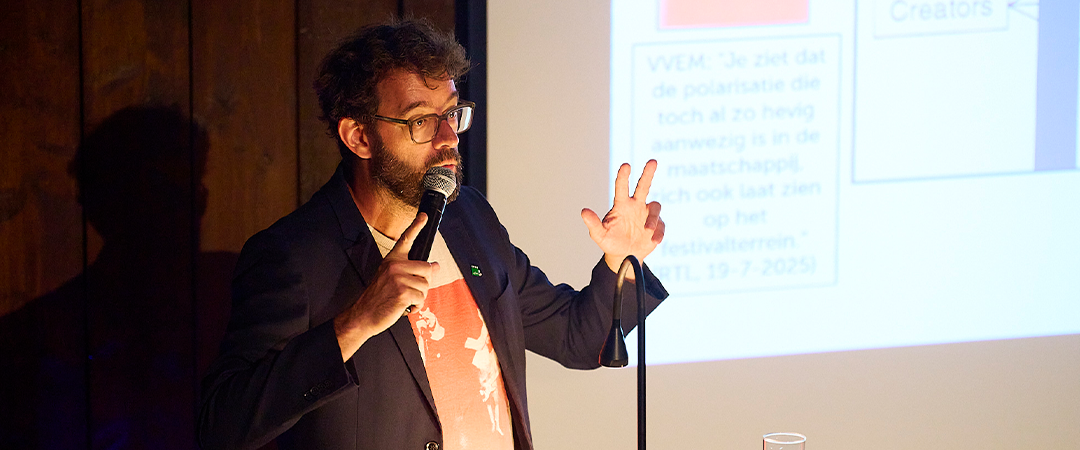
In the opening lecture, professor Pauwke Berkers takes you through the many intersections where music and protest meet. Why do they so often go hand in hand? What issues are musicians fighting against? What forms does that protest take and how does it impact audiences and politics? And of course: does protest music really make a difference?

About the lecturer:
Pauwke Berkers is Professor of Sociology of Popular Music at Erasmus University Rotterdam. His research focuses on inclusion, well-being, and resilience in music industries. He co-founded the Rotterdam Popular Music Studies (RPMS) group and co-authored Gender in Metal Music Production. Berkers investigates how gender and ethnicity shape participation in popular music, and his projects explore diversity in festivals, resilience in creative work, and the role of protest music.

In 2023, he delivered his inaugural lecture, What Music Means: Industry, Society, Sociology, highlighting how music connects to major societal themes like equality, social cohesion, and enchantment. A lifelong punk enthusiast and passionate tape collector, Berkers combines academic rigor with a deep love for music and its role in shaping society.

MUSIC THAT CHANGED THE WORLD #1

Wednesday 30 September 2026

buy tickets